
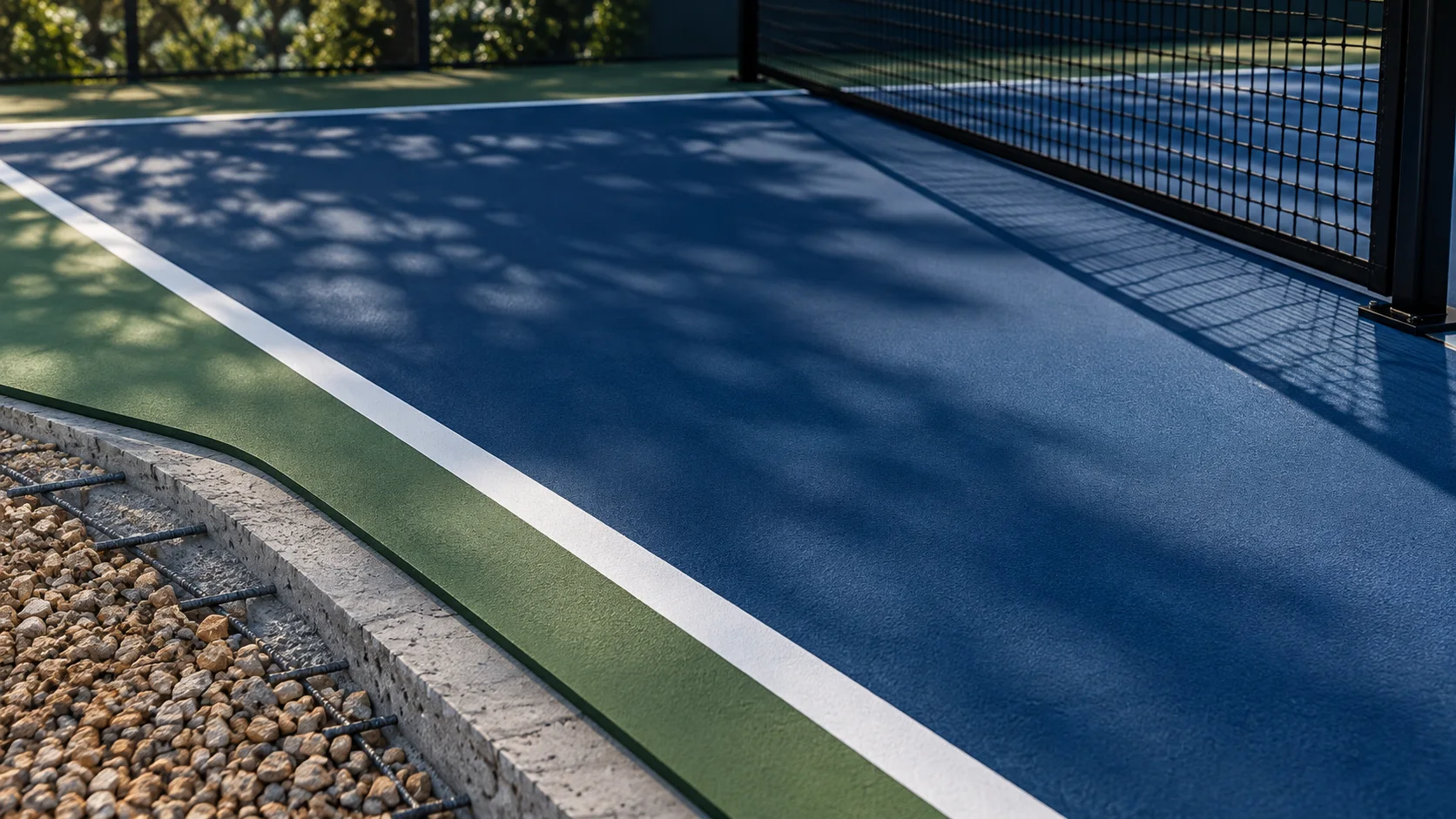
Cushioned Courts in North Texas
A bonded rubber layer carried beneath the color coats, offered in three thicknesses. Review whether cushion belongs in your DFW court scope before the surfacing package is priced.
Cushion is quoted after a site review, so it is not part of the instant estimate.
Is a cushioned court right for you?
It is decided before the surfacing is priced, not bolted on later. Four questions usually give you the answer.
- Who plays, and how often: Households playing briefly and occasionally gain less from the layer than those running long sessions several times a week.
- What your concrete is doing: A sound, well-drained slab is the precondition. Movement and ponding are addressed first, on their own merits.
- How you want it to play: Thickness and finish texture are chosen together, since each one shapes the result the players actually experience.
- When you want to be playing: Bonded systems carry cure and weather windows. Those windows, not crew availability, set the realistic start date.
What's actually under your feet
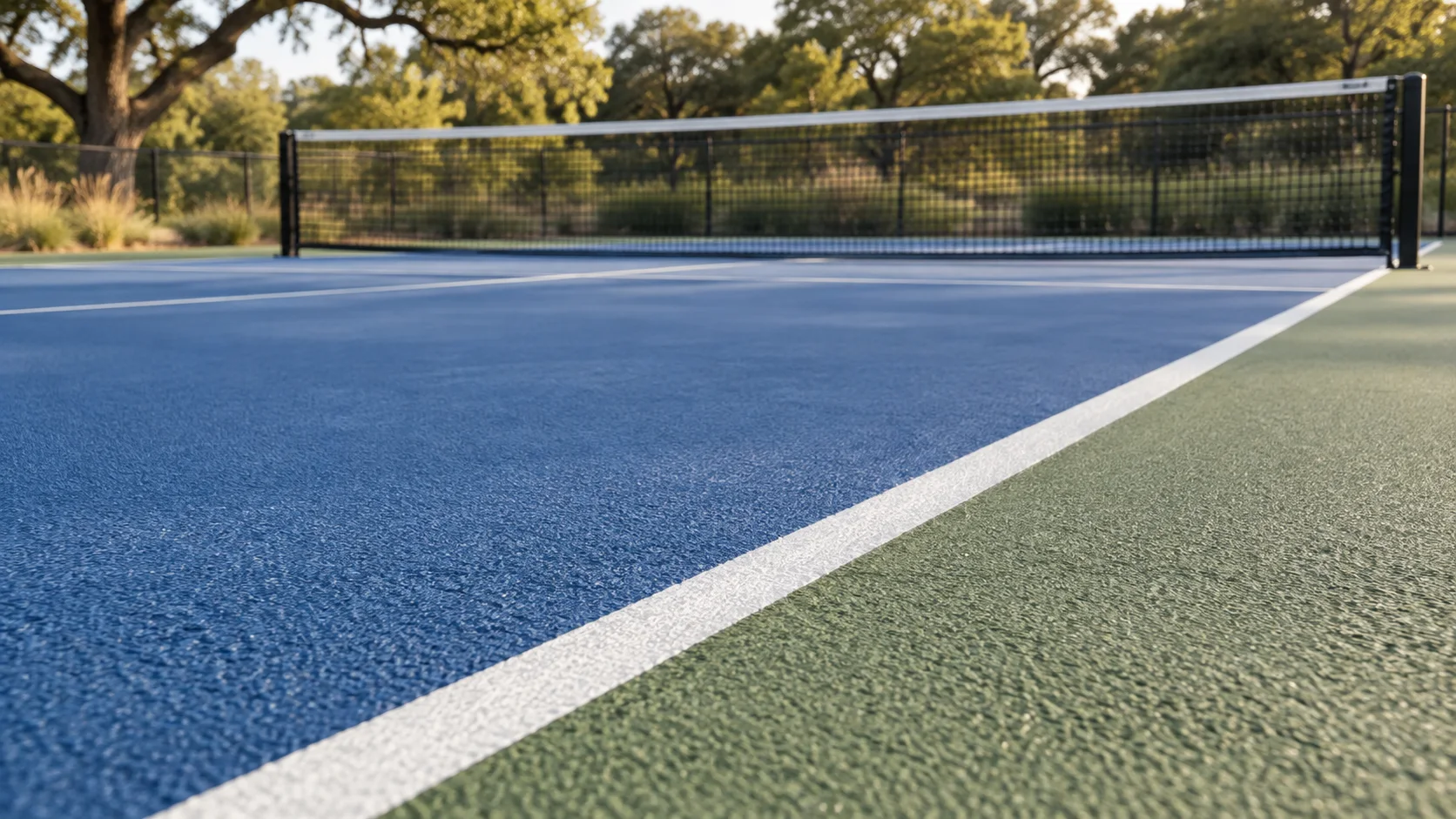
CushionX arrives as a finished rubber sheet made at the AT Sports factory, not a mix stirred up in your driveway. Here is what that sheet is and what it will stick to.
Recycled rubber mat
Rolled goodsCrumb rubber recovered from post-consumer sources, stated at eighty-six percent of the mat and bound with polyurethane. Arriving as finished rolls means thickness and density are set at the plant.
Two ways it bonds down
Water-based or urethanePlacement is by spray or by squeegee. The route follows the substrate and selected thickness, and it also affects how long the deck waits before coating begins.
What it can go over
Concrete or asphaltBare or already carrying a coating, which is what puts an existing DFW court in scope. Site condition still decides eligibility in every individual case.
How fast it goes down
Manufacturer claimAT Sports reports placement running roughly threefold quicker than cushion layers assembled on site. Cure windows still govern the overall duration.
Ask for the product data sheets covering the mat, the adhesive and the finish coats. A proposal that names the system without naming its layers is difficult to compare against anything.
How soft do you want it?
You get three choices. Reading about them tells you almost nothing, so we bring samples out and put all three under your feet before you pick one.
Closest to a normal court
Takes the hardness off without changing how the ball behaves. A good pick if everyone is used to a normal court and does not want it to feel strange.
The popular middle
The one most families land on. It is softer than you expect from a single step up, which is exactly why we want you standing on it first.
The softest option
The most give you can get. Worth it if you play for hours, if knees and hips are a factor, or if the court is busy most of the day.
Three ways to build it
Thickness and build are two separate choices. Any thickness works with any build; what changes here is what goes on top of the rubber.
Backyard and family courts
The rubber is bonded down and the seams are sealed. On top go a sealer, a smoothing layer, and finish coats built to flex with it. Specified for household use rather than continuous occupancy.
HOA and community courts
Swaps that sealer for a reinforced mesh. The manufacturer points this one at courts that get used harder, and by more people, than a family court does.
Clubs and tournament venues
Keeps the mesh, then finishes in urethane instead of acrylic. Choose it for courts in use all day and for places that host real events.
Why it matters in North Texas
Comfort is why most people ask. The three reasons below are our own read on playing here, not promises from the manufacturer.
Long sessions in humid heat
Summer play here tends to start early and run late into the evening. Fatigue accumulates through the legs well before anyone decides to stop, and a compressible deck is felt most in those last rounds.
Coatings that tolerate a little movement
The finishes specified above the mat are formulated to flex. On slabs that shift slightly with the seasons, that tolerance is worth having, though it repairs nothing on a slab with a genuine fault.
Households that share the court
Where several generations use the same court, the people most sensitive to a rigid surface are rarely the ones choosing the specification. Worth raising deliberately before the decision is made for them.
You don't need a brand-new court
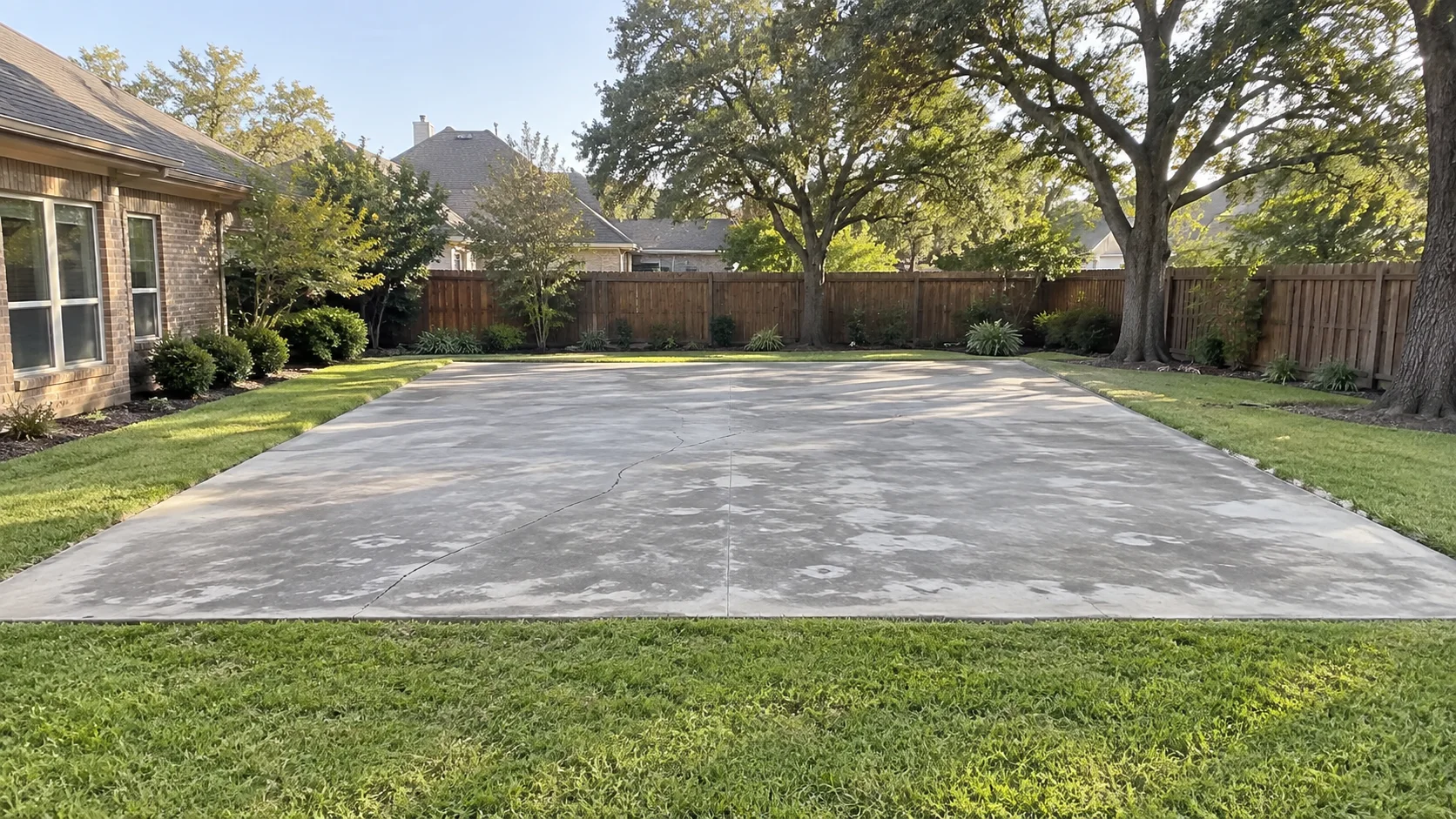
Because the system is accepted over surfaces that already carry a coating, a court built years ago can receive it without starting again. That surprises owners who assumed cushion belonged only to new construction.
What we look at first is whether the deck sheds water, how flat it reads, and whether the existing coating is still holding. Those answers decide eligibility long before thickness or colour enters the conversation.
Quote a CushionX OverlayWhat decides how long it takes
It is rarely about when our crew is free. The waiting periods below come from the manufacturer, and nobody gets to shorten them.
Brand-new concrete
Held before bonding, and confirmed by a moisture reading beneath four percent rather than by the calendar alone. Newly laid asphalt waits fourteen days.
The urethane adhesive
Where that adhesive is specified, it cures before any finish goes over the top. Rushing this interval risks the bond that everything above depends on.
Weather
Every product carries limits for both. Winter cold snaps and long wet spells close the window for days at a stretch, which is why a firm date arrives late rather than early.
What your quote should spell out
Every layer, named
Mat thickness, adhesive type, seam treatment, sealer or membrane, and the finish coats should each be named. Two quotes describing the same brand can differ substantially underneath.
Review our credentialsWhat they found on your court
What was observed about slope, ponding, cracking and coating adhesion, and which repairs are included before the mat is placed. Cushion is specified on top of a resolved base, never instead of one.
Why the dates are what they are
Cure intervals and the temperature and moisture limits that apply. A schedule that ignores them is a schedule that will move once North Texas weather has its say.
Questions we hear from DFW homeowners
- Will cushion fix a slab that is cracking or shifting?
- No, and it should not be proposed that way. North Texas soils shrink and swell seasonally, and a cushioned assembly still follows whatever it is bonded to. Active movement, failed joints and drainage faults are assessed on their own terms before any surface system is selected.
- Can it go over the court we already have?
- Possibly. The system is accepted over concrete and asphalt, whether bare or previously coated. Eligibility turns on the condition found on site: slope, ponding, flatness and how the existing coating is bonded. We would want to inspect those before treating an overlay as the plan.
- Does it slow the ball down?
- Speed is governed largely by the sand content in the finish coats rather than by the layer underneath, so pace remains something you specify. Players tend to notice the cushion during extended sessions rather than in the opening rally.
- How much easier is it on your body?
- AT Sports states the system offers up to fifteen percent more impact resistance than a conventional court surface. We pass that figure along as the manufacturer's published position rather than as a measurement taken on your property.
- How long do we wait if the concrete is new?
- Manufacturer conditions govern the calendar. Brand-new concrete is held for thirty days and tested to confirm moisture sits under four percent; new asphalt waits fourteen. Where the polyurethane adhesive is used, a further four to seven day cure precedes the color coats.
- Does winter weather push the dates back?
- It can. Adhesives and coatings carry temperature and moisture limits, and DFW winters produce stretches when those limits are not met for days at a time. We prefer to postpone a start date rather than place a bonded system outside the limits printed on the product data sheet.
- Which build does a backyard court need?
- Level 1 answers most private installations in this region. The reinforced membrane in the upper levels is written for traffic a household does not generate, and writing it into a household installation adds cost without extending service life.
Ask us about a cushioned court
The instant estimator covers standard acrylic decks only, so cushioned work is priced individually. Send the details below and someone will get back to you, carrying each thickness along so the choice happens underfoot rather than on paper.