
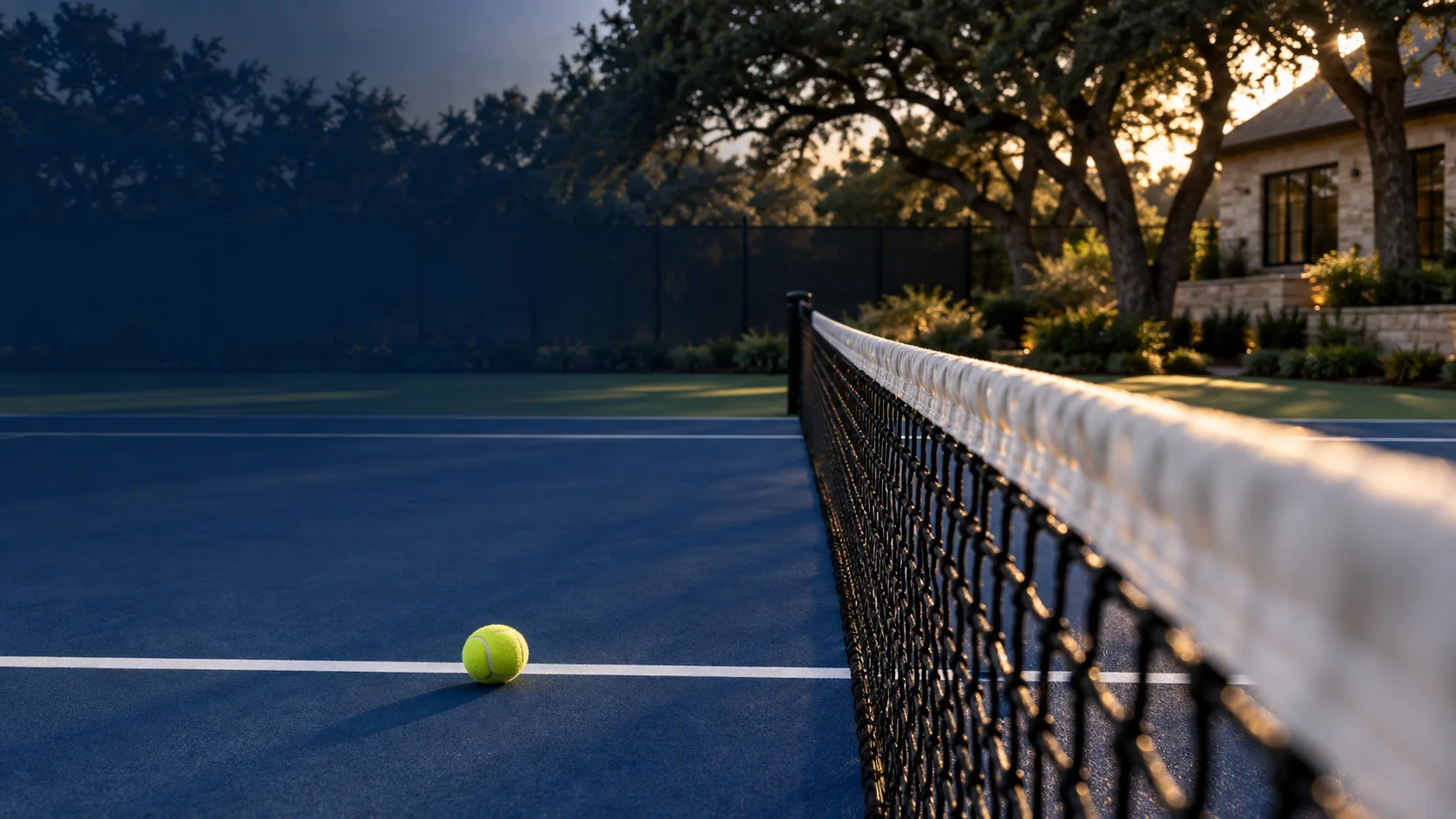
Tennis Courts in Dallas–Fort Worth
Tennis court construction, resurfacing and conversions in DFW. Review the full court footprint, existing surface and equipment with TX Pickle Courts.
Get a preliminary range, then share your site details for a more useful review.
New tennis courts and existing-court decisions
The right starting point may be a property layout, a condition assessment or a new use for an older court.
- New-court planning: Bring the full footprint, drainage, structural slab, fencing, posts, lighting and coating system into one coordinated plan.
- Pickleball adaptation: Study blended markings or dedicated layouts against the court dimensions, net arrangement and intended users.
- Surface assessment: Separate normal coating wear from drainage or slab movement before choosing repairs, color coats and striping.
- Care planning: Clear storm debris, pollen and organic growth using methods compatible with the existing sports surface.
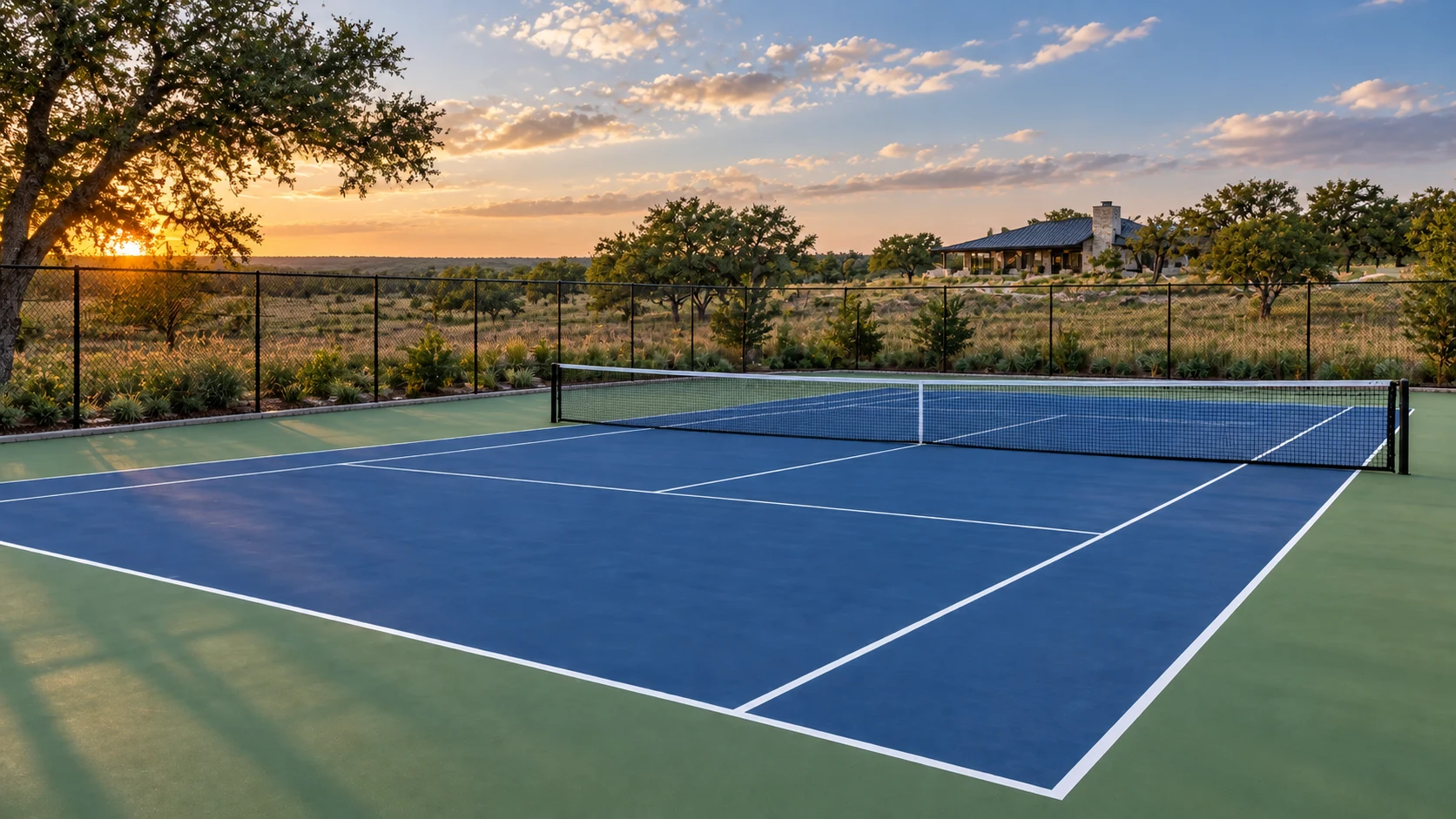
Read the site before choosing the finish
Court lines are only part of a tennis layout. Runoffs, fencing, entry gates and nearby structures affect whether the site works safely and comfortably.
Map the complete footprint
New constructionBefore discussing a new pad, gather a survey and note elevation changes and construction access. The scope should account for the complete footprint.
Inspect after rainfall
Drainage cluesWalk the surface after rain and note puddles, texture changes, peeling and returning cracks. Photograph the same concerns from both a distance and close up.
Separate wear from movement
Repair scopeThose observations help frame a resurfacing discussion. If the base is moving or drainage is poor, a finish alone will not resolve the underlying issue.
Choose the court's next use
Tennis or shared playAn older tennis court may remain dedicated to tennis or become a shared sport space. Compare the intended users, net arrangements and line colors before choosing.
We can discuss resurfacing and layout options while keeping the actual slab condition and intended play experience at the center of the proposal.
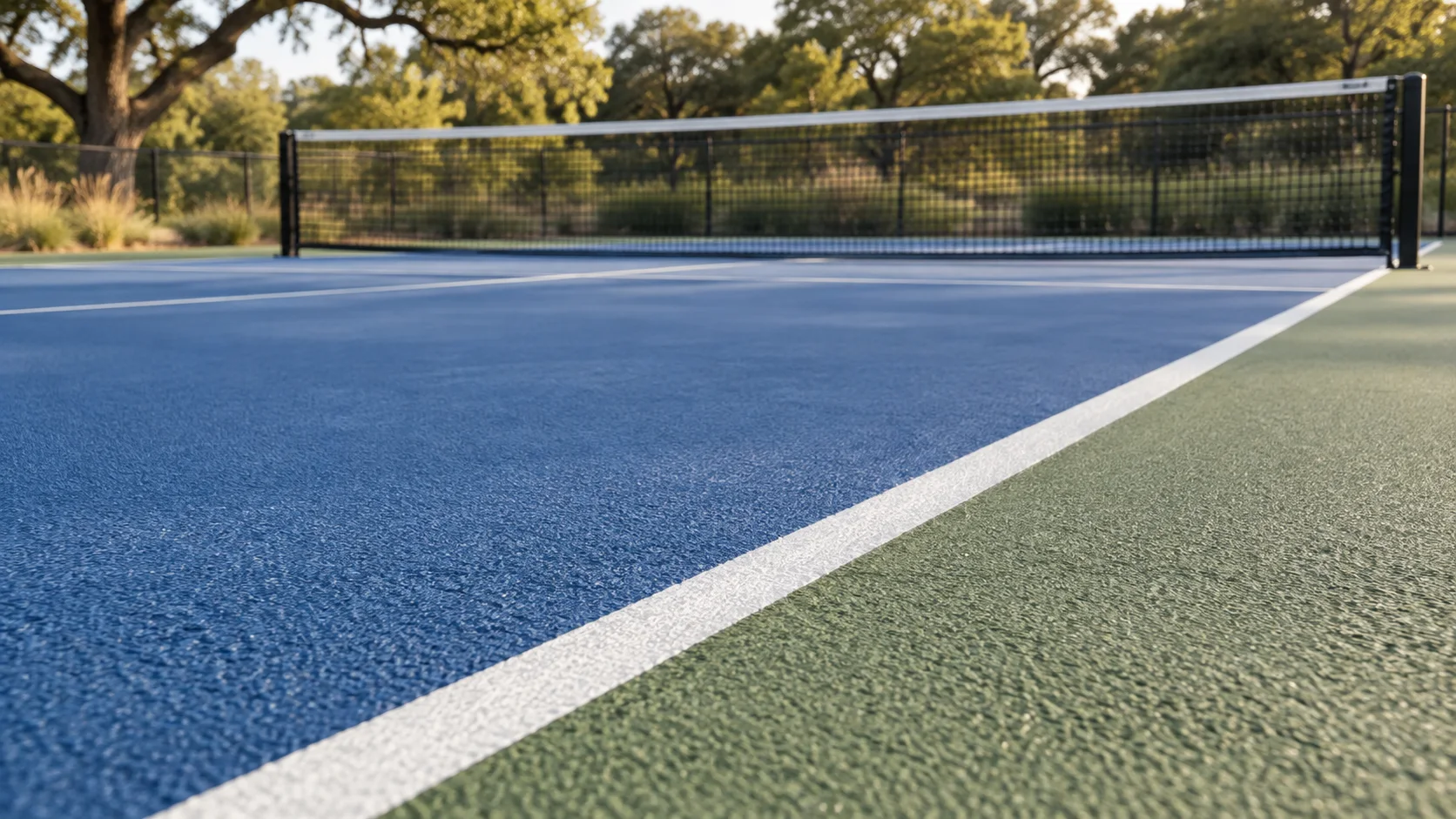
Diagnose the surface before recoloring it
Sun exposure, use and debris can wear a tennis court finish. Check for fading, loss of texture, peeling and recurring cracks. Those signs help determine whether the court needs coating work or a closer look at its base.
Surface wear and structural movement require different responses. We review cracking, low spots and coating condition before recommending repair or resurfacing.
Build a Resurfacing RangeWhat should be clear in a tennis proposal
A clearly defined surface system
The proposal identifies the preparation, repairs, color coats and striping included for the selected Laykold system.
See our authorizationComparable project pricing
Show us a written quote and we can compare the included preparation, surface system, equipment and site work before discussing price.
A finish chosen for the court
We review color, texture and system options against the existing surface, intended use and exposure at the property.
Ways an older tennis footprint can evolve
Keep tennis visually primary
A restrained secondary color can add pickleball without giving both sports equal visual weight. Review a color sample and line plan before coating begins.
Consider dedicated pickleball
A full tennis footprint can support several pickleball layouts. The usable count depends on existing dimensions, fencing, access and the clear space required around each court.
Review the perimeter
Existing fence height, gate positions, damaged fabric and windscreen loads all affect a conversion. Treat the enclosure as part of the court assessment, not background scenery.
North Texas tennis court questions
- When should a DFW tennis court be evaluated for resurfacing?
- There is no responsible calendar answer without seeing the court. Worn texture, widespread fading, peeling, ponding and cracks that return after repair are reasons to inspect both the coating and the base before selecting a scope.
- How much property should I reserve for tennis?
- A 60 by 120 foot fenced envelope is a useful planning reference for a full court with surrounding play space. The site may need additional room for drainage, access, fencing foundations, lighting and nearby improvements. We check the complete plan rather than fitting only the painted lines.
- Can an existing tennis court support pickleball?
- A suitable tennis court can receive blended pickleball markings or be evaluated for a dedicated conversion. Net placement, fencing, gates and clear space determine which layouts work. The surface condition should be reviewed before new color and lines are applied.
- How does orientation affect a North Texas court?
- The sun angle changes throughout the day and season, so orientation influences glare at each baseline. Trees, houses and proposed lights also shape the result. We study those conditions on the property instead of promising that one compass direction solves every site.
- Do you repair cracks, or just coat over them?
- Cracks should be evaluated before recoating. Repair methods depend on the slab, the type of movement and the selected surface system. A coating alone cannot correct an active structural problem.
- Can the surface specification change court pace?
- Texture is one factor in ball speed and bounce. The selected Laykold system should match the intended players and existing substrate, with the actual product build documented in the proposal.
Start with the tennis court you actually have in mind
Select new construction or an existing surface, then use the preliminary range to begin a site-specific review.
Set My Starting Scope