
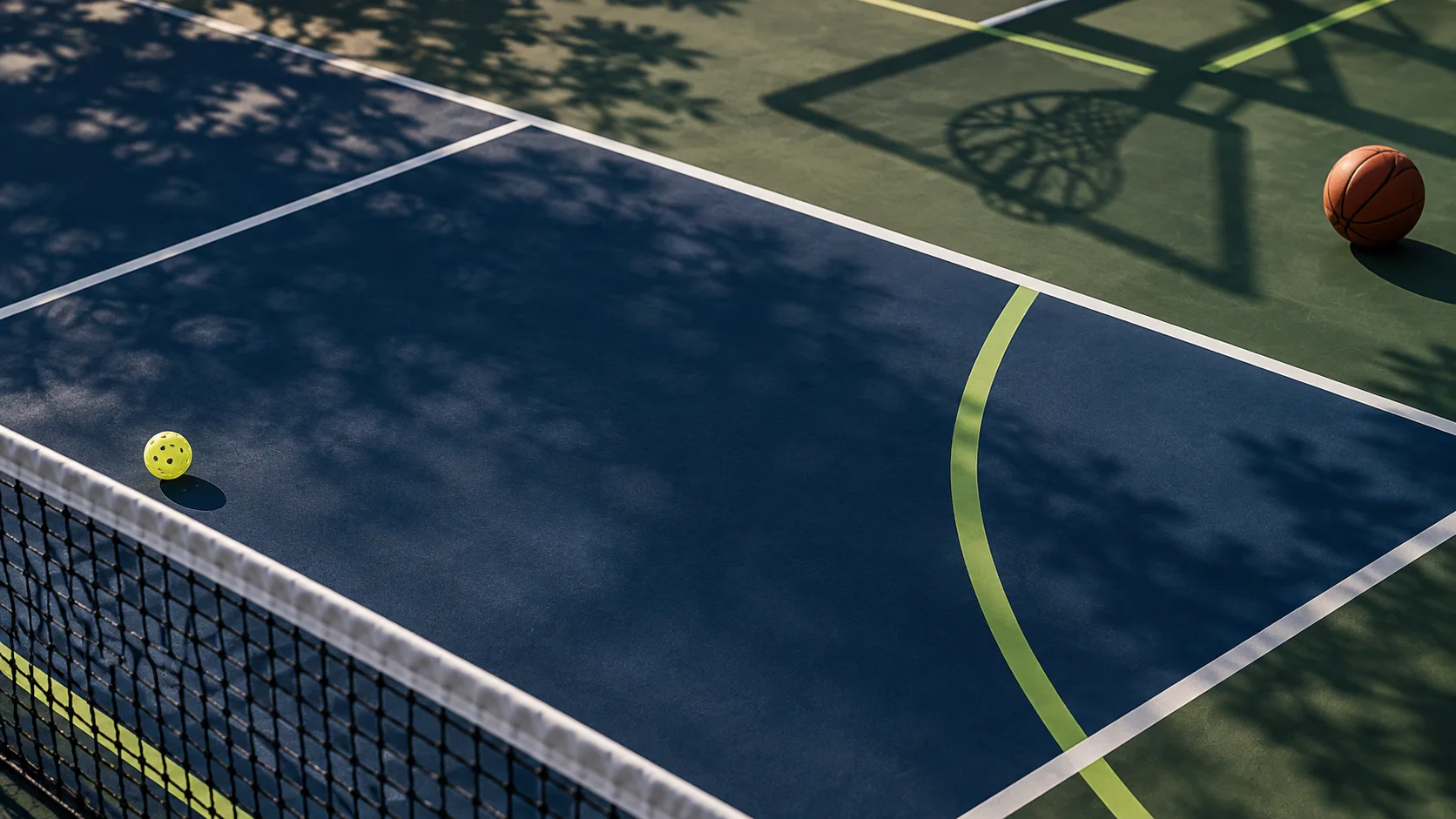
Backyard Multi-Sport Courts in Dallas–Fort Worth
Plan a DFW backyard court for pickleball, basketball and more. Compare pad sizes, sport layouts, equipment and surfacing with TX Pickle Courts.
Choose the lead sport, pad and equipment, then see how each decision affects the budget.
Design one pad around real priorities
A shared court succeeds when the slab, markings and movable equipment are planned as one routine rather than a collection of sports logos.
- Purpose-built pad: Coordinate the engineered slab with sleeves, hoop foundations, fencing and the clearances required by the selected games.
- Concrete conversion: Verify that the existing pad can support a useful layout before adding coating, markings and equipment.
- Line-plan reset: Reconsider the visual hierarchy during resurfacing so old and new markings do not compete through the finish.
- Surface care: Keep drains and edges clear, then use coating-compatible methods for dust, pollen and organic buildup.
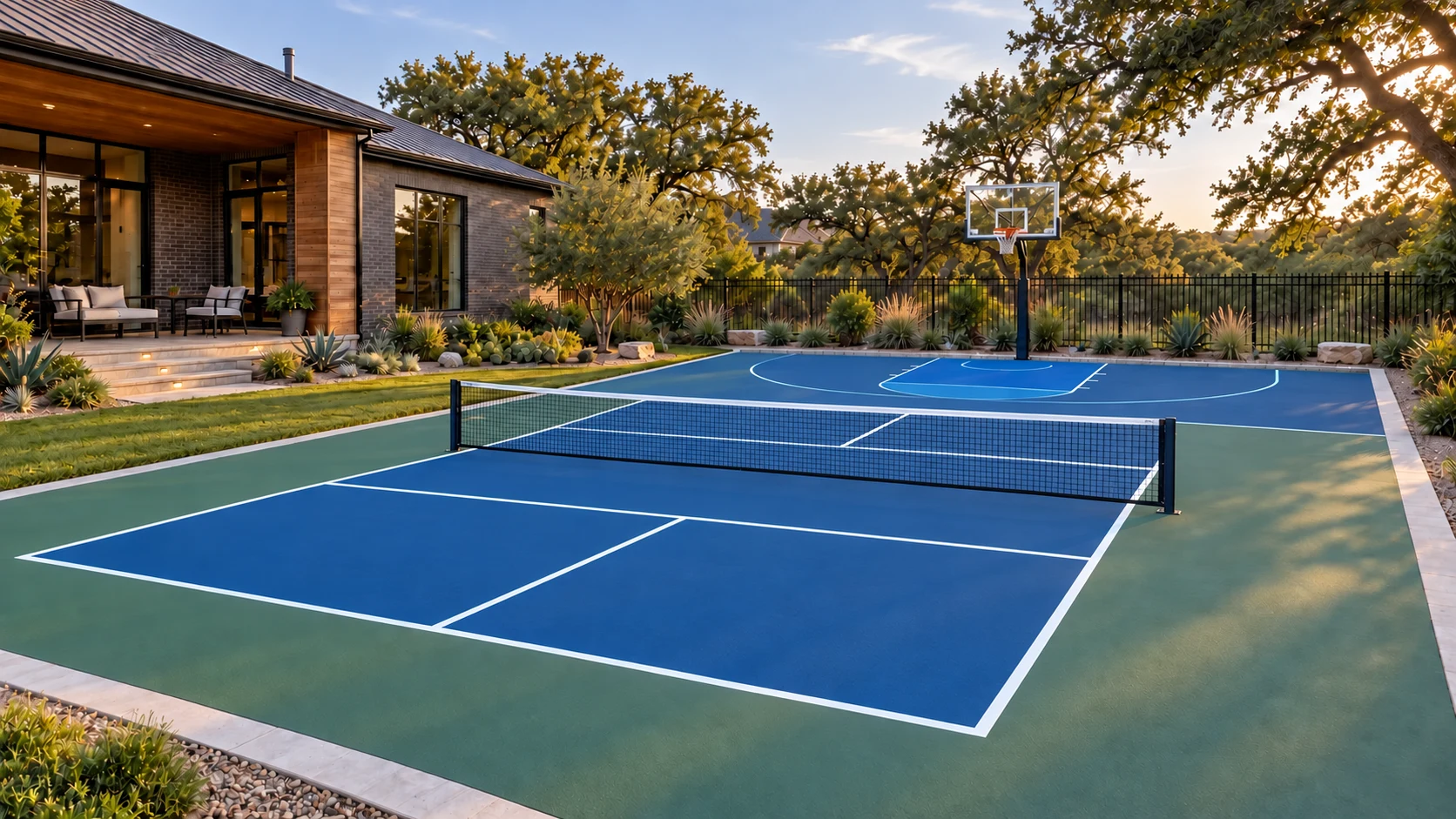
Start with compatibility, not a sport count
Start with the sport you will play most often. Then evaluate whether the remaining space supports the additional games you want. A larger pad is not automatically a better arrangement.
Pickleball and basketball
Compact combinationEquipment locations, clear runoffs and readable line colors help keep the design practical. Identify which items will stay fixed and which will move between games.
Pickleball and tennis
Full-court planningThink through where a rolling net goes during basketball, how gates open and where unused equipment is stored. That everyday transition is easy to overlook in a rendering.
Volleyball overlay
Equipment-led layoutA layout that needs heavy equipment moved for every short game may be less useful than a simpler plan. Test your preferences in the designer before finalizing the scope.
Basketball with full tennis
Largest footprintSave the sport combination, pad size, colors and equipment selections together. This makes it easier to review the cost of changing one choice.
Some site work and custom lighting require separate assessment. The final proposal should state what is included and which assumptions remain subject to the property review.
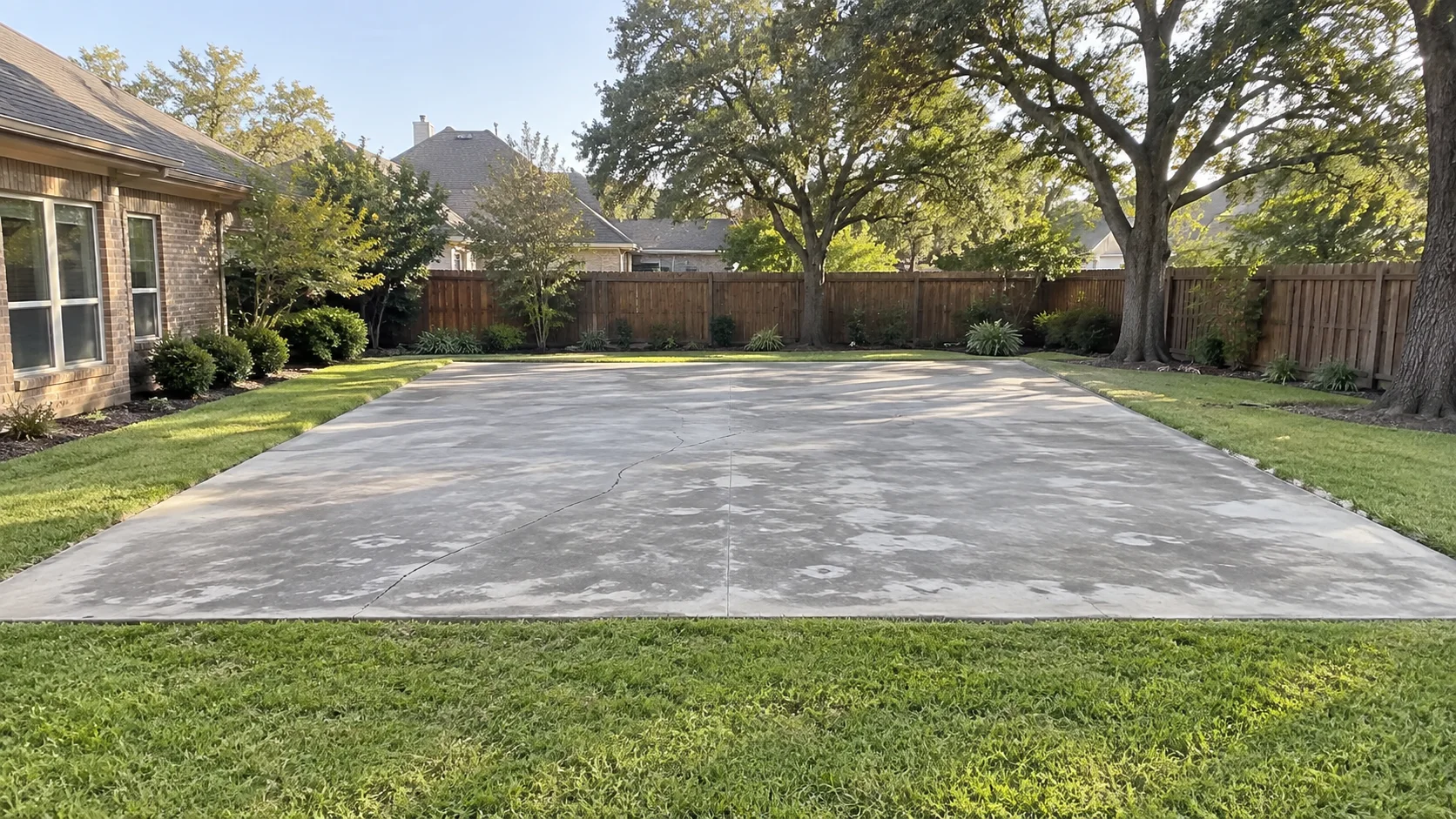
Test the existing rectangle before adding lines
An older tennis court, sport pad or unused concrete area may provide a starting point. We first review dimensions, drainage, joints and cracking to determine whether a new sport layout and surface are appropriate.
These images show two different properties and illustrate a possible starting pad and a completed multi-sport concept. Existing concrete still needs an on-site review for drainage, dimensions and movement.
Evaluate a Conversion BudgetThree decisions that keep the project coherent
A coordinated surface and line plan
The proposal identifies the selected Laykold system and the line hierarchy for every sport so the finished court remains easy to read.
See our authorizationA scope you can compare
Bring another written proposal and we can compare the pad, preparation, surface system, equipment and site work on equal terms.
Designed around daily use
Color, equipment, lighting and access are considered together so switching between sports remains practical for the household.
Make every changeover simple
A visible line hierarchy
Reserve the strongest contrast for the lead sport. Give every additional marking a clear purpose and confirm intersections on the final striping drawing.
Clear storage off the pad
Rolling nets and removable posts need a destination when they are not in use. Plan that storage path so changing games does not block a gate or create a trip hazard.
Hardware chosen before concrete
Sleeves, anchors and separate hoop footings affect the construction sequence. Select compatible equipment early enough to place those elements accurately.
DFW multi-sport planning questions
- How do you keep a shared court from looking cluttered?
- Choose one primary sport and give its markings the strongest contrast. Secondary lines should remain distinct without competing at every intersection. We review the complete line drawing and color palette together before the surface is installed.
- What determines a residential multi-sport court size?
- The lead sport establishes the core footprint. The secondary games, equipment offsets, safe circulation and the usable area on the survey determine what can be added. A 30 by 60 foot concept and a full tennis envelope serve very different properties.
- Is there a sensible limit on the number of sports?
- There is no useful universal number. Two well-planned games can be better than four compromised ones. We look for conflicts among line markings, nets, hoops, sleeves and storage before recommending another overlay.
- Can a basketball hoop be added beside existing concrete?
- It may be possible when the chosen hoop has room for an appropriate footing and overhang without creating a hazard. The slab edge, underground utilities, drainage and active playing zones all need to be checked first.
- How can one pad accommodate different net heights?
- The plan can use sport-specific removable posts, compatible sleeves or a rolling system, depending on the games and equipment. Any embedded sleeves should be selected before the pour and coordinated with the structural design.
- Which sport should control the layout?
- Use the game your household expects to play most and the one with the least flexible equipment geometry. That choice guides orientation, dominant markings and clear space. Secondary sports then fit around it without weakening the main experience.
Which games belong on your court?
Use the designer to test the sport mix and equipment. Then carry that saved configuration into a preliminary project range.
Plan My Sport Mix